
Introduction
There’s a strange thing about reading nooks: they’re one of the only parts of a home that ask for almost nothing and pay you back every single day. No extra square footage required. No big renovation budget. Just a bit of intention.
I’ve spent years poking around other people’s homes — professionally, mostly, though the habit spills into my own life too — and the reading corners that actually get used, week after week, tend to share the same three things. Good light. A chair that fits an actual human body, not just a magazine spread. And some sense that the spot is separate from the rest of the room.
This list runs through 25 ideas, from a $40 floor cushion in the corner of a rented bedroom to a full built-in window seat with hidden storage underneath. If you’ve got a spare room, great. If you’ve got one slightly awkward corner nobody knows what to do with, that works too — there’s a version of this that fits either one.
What Actually Makes a Reading Nook Work
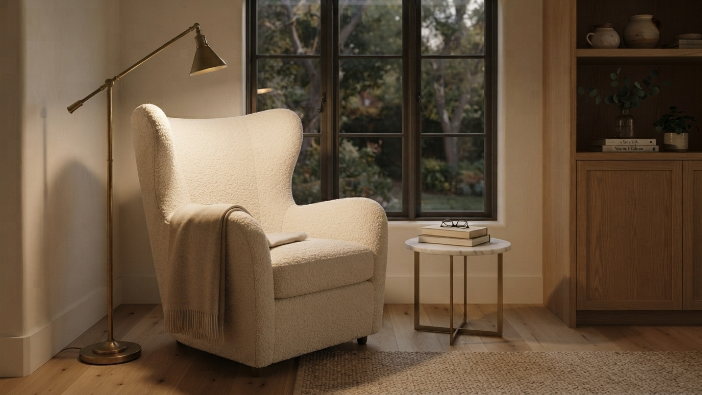
Before getting into specific setups, it’s worth breaking down why some nooks get used constantly and others turn into expensive laundry-drying spots. It really comes down to three decisions, stacked on top of each other: a defined boundary, seating that actually supports you, and light you can control.
The boundary matters more than people expect. It can be architectural — an alcove, a bay window, a stair landing — or it can be something you build with furniture: a bookshelf turned sideways, a curtain, even just the back of a sofa creating a pocket of space. What you’re going for is a feeling that this spot is different from the rest of the room. That’s the thing that makes it restful instead of just being another chair sitting in an open space.
Seating comes down to comfort, not looks, full stop. A gorgeous chair that has you shifting positions every ten minutes is a chair nobody sits in past the first week. Seat depth and back height matter more than the fabric. You want something built for actually staying put, not a five-minute perch.
And light needs to be something you can adjust, not something you’re stuck with. Natural light is wonderful during the day, obviously — but every nook that gets used past 6pm needs its own dedicated light source, something that isn’t tied to the room’s main overhead fixture.
Small-Space Ideas
Not everyone has a spare room lying around. These work in apartments, studios, and corners most people walk right past.
The corner floor cushion. A cushion, a low side table, a wall-mounted reading light — that’s the whole setup, and it barely dents your floor space. Works especially well tucked into a bedroom corner that’s otherwise doing nothing.
Turning a closet into a reading den. Pull the door off a shallow closet, drop a cushion on a low platform inside, and suddenly you’ve got a strange little private space that feels almost like a fort. Kids love this one, but honestly, so do adults.
Under the stairs. If your place has that awkward triangular space under a staircase, converting one run into a low bench with cushions might be the single most efficient use of dead space in the whole house.
The end of a hallway. Even a narrow stretch of hallway can hold a slim armchair and a floor lamp — you just have to pick furniture scaled to fit, not furniture you already own and are trying to squeeze in.
A fold-down shelf. A slim, wall-mounted drop-leaf next to a chair gives you somewhere to set a mug or a bookmark without committing to a full side table you don’t have room for anyway.
Window Seat Ideas
Ask anyone what their dream reading nook looks like and there’s a good chance they’ll describe a window seat. Makes sense — natural light and a view do most of the design work without you lifting a finger.
A built-in bench with storage underneath. A plywood box built into a window bay, topped with a custom cushion, gives you permanent seating and hidden storage in one move. This is the one people request most when they’re renovating.
Layered textiles in a bay window. Stack two or three cushions in varying sizes, throw a folded blanket over one end, and you get that slightly rumpled, lived-in look that reads as inviting rather than staged.
Curtains framing the seat. Floor-to-ceiling curtains on either side, drawn partway, soften the light and add a sense of enclosure without blocking the view entirely.
The radiator-cover bench. Common in older homes — a custom wood cover built over a radiator doubles as seating and hides a fixture nobody wants to look at.
Just a cushion on a deep sill. If a full bench isn’t in the cards, a fitted cushion on a deep windowsill with a couple of pillows is genuinely enough. Don’t overthink this one. Also read 21 Coastal Decor Ideas That Bring Relaxed Beach House Style Indoors
Budget-Friendly Options
Cozy doesn’t require an expensive chair. It requires layering.
- A secondhand armchair, reupholstered in something bold
- An IKEA POÄNG (or similar) paired with a sheepskin throw
- A hammock chair hung from a ceiling joist, for something a little more playful
- A daybed pulled from a spare room and dragged over to a window corner
- A plain canvas director’s chair, dressed up with a cushion and a folded blanket
Luxury Styling
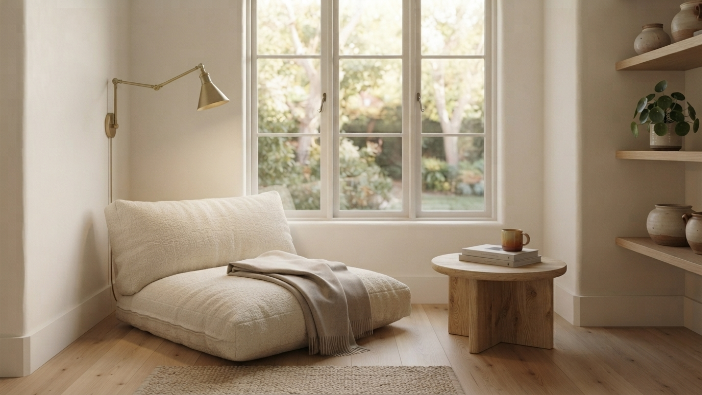
For a more editorial look — quiet luxury, essentially — think rich materials, restrained color, and details that feel considered rather than accumulated.
- A bouclé wingback chair next to a brass floor lamp
- Built-in bookcases flanking a velvet chaise
- A leather club chair with a marble side table
- Cashmere or wool throws layered in a tonal palette, rather than mismatched patterns fighting each other
- A small vintage rug layered over wall-to-wall carpet, which does more to anchor a seating area than people expect
A Few More Worth Trying
- A daybed under a skylight, for stargazing while you read
- A reading swing on a covered porch
- A tucked-away attic corner with a low ceiling and a single skylight
- Two small chairs facing each other, for a shared family reading spot
- An old church pew, softened with cushions, facing the garden
Lighting: Where Most Reading Nooks Fall Short
This is the part people skip, and it shows. A single overhead bulb gives you flat, tiring light that’s genuinely bad for reading anything longer than a menu.
A task lamp with an adjustable arm lets light land directly on the page instead of washing the whole room. Warm-toned bulbs — somewhere around 2700K to 3000K — read as cozy; cool white reads as a dentist’s office.
It helps to layer in some ambient light too, a small table lamp or a string of lights nearby, so the nook still feels inviting even when nobody’s actively reading in it. And for window seats specifically, a plug-in sconce mounted beside the seat usually beats a floor lamp that just eats into space you don’t have.
Case Study: The Dead Corner That Became the Busiest Spot in the Apartment
I came across a one-bedroom renovation a while back that had this genuinely awkward L-shaped corner next to a north-facing window — too narrow for a desk, too small for a real armchair, the kind of space most people just leave empty or pile boxes into.
The owners built a plywood platform, 14 inches deep, along the short wall. Added a custom foam cushion. Mounted a single articulating wall sconce above it. That’s it — no elaborate carpentry, no custom millwork beyond the platform itself.
What actually made it work was what they didn’t do. They resisted adding a side table, since there wasn’t room for one anyway, and used a small wall-mounted shelf instead — just enough for a mug and whatever book was currently in rotation.
Total cost, including the cushion and hardware, came in under $300. Within a few months it had quietly become, by their own account, the most-used seven square feet in the whole apartment.
The takeaway, if there is one: build to the exact dimensions of the corner you have rather than buying something off the shelf and hoping it squeezes in. A nook built to the inch reads as intentional. One that’s “close enough” reads as exactly that.
Mistakes Worth Avoiding
- Picking style over comfort. A stunning chair with no lumbar support gets abandoned within a month, no matter how good it looks in photos.
- Depending only on daylight. Fine until sunset, useless after. Always add a dedicated lamp.
- Overcrowding the space. A nook needs room to breathe — too many cushions or an extra side table crammed in defeats the whole point of a calm retreat.
- Ignoring noise. If the nook sits near a hallway or kitchen, a rug and some soft textiles go a long way toward absorbing sound and reinforcing that sense of separation.
- No landing spot for books or tea. Even a small shelf or stool keeps clutter off the floor and out of the way.
A Quick Checklist
- Boundary defined — alcove, curtain, shelf, or clever furniture placement
- Seating actually tested for comfort, not just judged by eye
- Dedicated task lighting installed
- Warm-toned bulb, not cool white
- A landing surface for books, glasses, or tea
- Textiles layered for warmth — throw, cushions, rug
- Storage sorted, whether that’s a basket, shelf, or built-in bench
- Noise and foot traffic accounted for
Final Thoughts
The best reading nooks aren’t about buying more — they’re about matching seating, light, and boundary to the specific corner you’ve actually got. A thoughtfully done $40 cushion setup will beat an expensive chair dropped in without a plan, every time.
Start with whatever spot in your home already gets decent light, test the seating before you commit to it, and build the atmosphere in layers: comfort first, then light, then the small details that end up making it feel like yours.
FAQs
What’s the best furniture for a small reading nook?
A slim armchair or a fitted window bench, generally — both hug the wall and leave the walking path clear.
How do I make a nook cozy without spending much?
cccLayer textiles. A throw, two cushions, a small rug, over whatever chair you already own, plus a warm-toned lamp. Those three moves do most of the heavy lifting.
Where’s the best spot for a nook in a small apartment?
Window corners, closet conversions, and stair landings tend to work best — they’re all space that would otherwise go to waste.
What lighting works best?
An adjustable task lamp with a warm bulb, somewhere in the 2700K–3000K range, positioned so the light hits the page and not the whole room.
Do I need a window for a good reading book?
Not really. Natural light is a nice bonus, but a well-lit corner with a decent task lamp holds up just fine, especially for evening reading.
How much does a window seat cost to build?
A simple DIY bench with a cushion usually lands somewhere between $150 and $400. A fully custom built-in with storage can run $800 or more, depending on materials.
What size chair fits best in a small nook?
Look for something no wider than 28–30 inches with a seat depth of at least 20 inches — that balance tends to work best for tight spaces.
How do I add privacy in an open floor plan?
A tall bookshelf, a floor-to-ceiling curtain, or even a large plant can create a visual boundary without you needing to put up an actual wall.